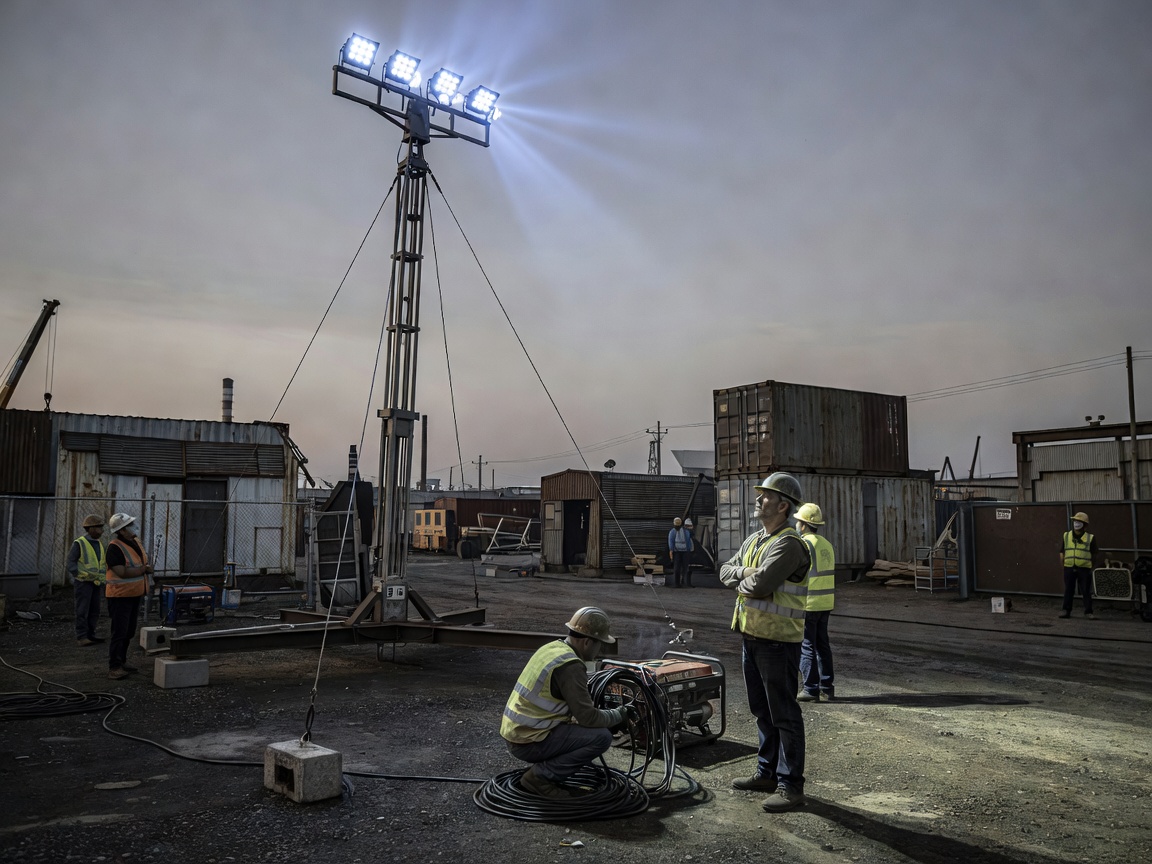
Routine observation has a useful role
Regular visual checks can identify changes before they become a wider planning issue. Look for damaged fixtures, disturbed mounting, visible cable or connection damage, dirt, water exposure, impact marks and changes in light output. Also walk the routes that the arrangement was intended to support. A light can remain switched on while a new hoarding panel, stored load or changed work front makes the original coverage less useful.
Repositioning may be needed when project phases change. New access points, altered pedestrian routes, moved storage or a different loading pattern can create gaps or glare. Record the date, location, observation and action owner. Photos and a simple marked plan can make recurring issues easier to identify.
Know the boundary
Routine visual observation is not the same as qualified electrical inspection or repair. Do not open equipment, alter wiring, work on live systems or attempt repairs unless you are appropriately qualified and authorised under the project’s controls. Report concerns through the responsible site or facilities process. The correct response depends on the equipment, environment and local requirements.
Replacement planning is easier when records include the type of issue, the location, the project phase and whether the problem recurs after weather or relocation. This can help a team decide whether the arrangement needs cleaning, repositioning, replacement or a broader review.
Practical maintenance checklist
- Observe fixtures, mounting condition and visible damage from a safe position.
- Note dirt, weather exposure, impact and changes in light output.
- Walk access routes, work areas, storage and entrances for coverage changes.
- Record moved barriers, hoarding, plant and project-phase changes.
- Escalate electrical concerns to qualified and authorised personnel.
- Keep dated notes for replacement and repositioning decisions.
Good for / What to know
Site managers, facilities teams, maintenance coordinators and contractors managing temporary systems.
Visual checks help identify concerns but do not replace qualified inspection, testing or repair.