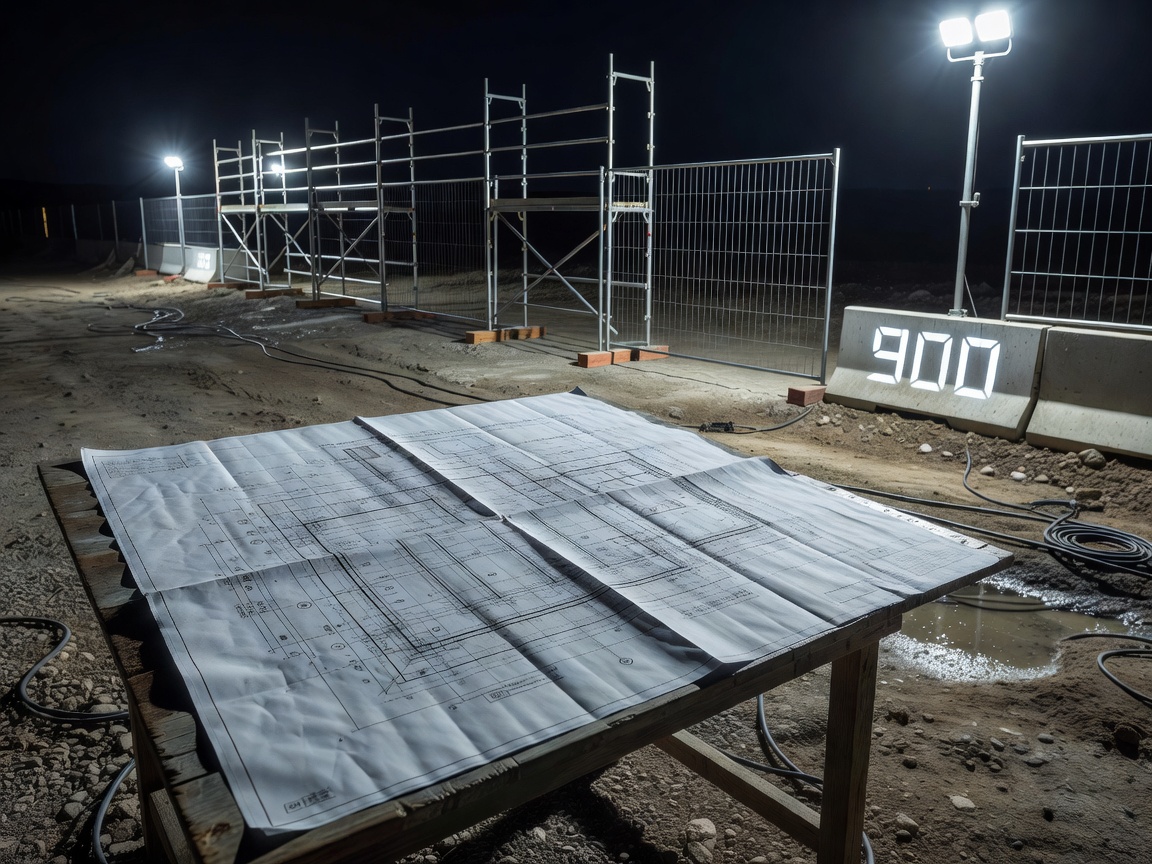
Start with the site, not the fixture
Begin by understanding how people, vehicles, materials and equipment move through the site during low-light conditions. Mark entrances, pedestrian routes, vehicle routes, work areas, storage zones and places where the layout is likely to change. The purpose is not to select one arrangement that stays untouched; it is to create a clear process for reviewing coverage as the project develops.
Project phases matter. Groundworks, structural work, fit-out and commissioning can each create different access points and shadows. A route that is straightforward during one phase may become obstructed or diverted later. Longer-duration projects may need a more deliberate review cycle than a short shutdown or evening activity, while temporary arrangements should still be suitable for their expected exposure to weather and site traffic.
Coordinate with the wider site plan
Lighting should be discussed with temporary works, logistics, security, welfare, storage and emergency planning teams. This helps identify conflicts before equipment is placed. Consider whether light could create glare for drivers, obscure signs, interfere with cameras or leave a working area visually disconnected from its access route. Local requirements and project conditions vary, so project-specific decisions should be confirmed by the responsible competent professionals.
Planning documentation can be simple but useful: a dated layout, marked routes, assumptions, responsible contacts, review dates and notes about changes. Photos from key viewpoints can help compare conditions over time. Keep the record current when work fronts, hoarding, scaffolding, deliveries or access arrangements move.
Practical planning checklist
- Mark entrances, pedestrian routes, vehicle routes and loading areas.
- Identify work fronts, storage zones and likely shadowed areas.
- Note project phases, expected duration and planned layout changes.
- Discuss glare, weather exposure and visibility around signs and crossings.
- Agree who reviews the arrangement and how changes are recorded.
Good for / What to know
New construction sites, phased refurbishments, industrial shutdowns and projects where access changes regularly.
This is general information. Equipment selection, installation, inspection and local requirements depend on the specific project.