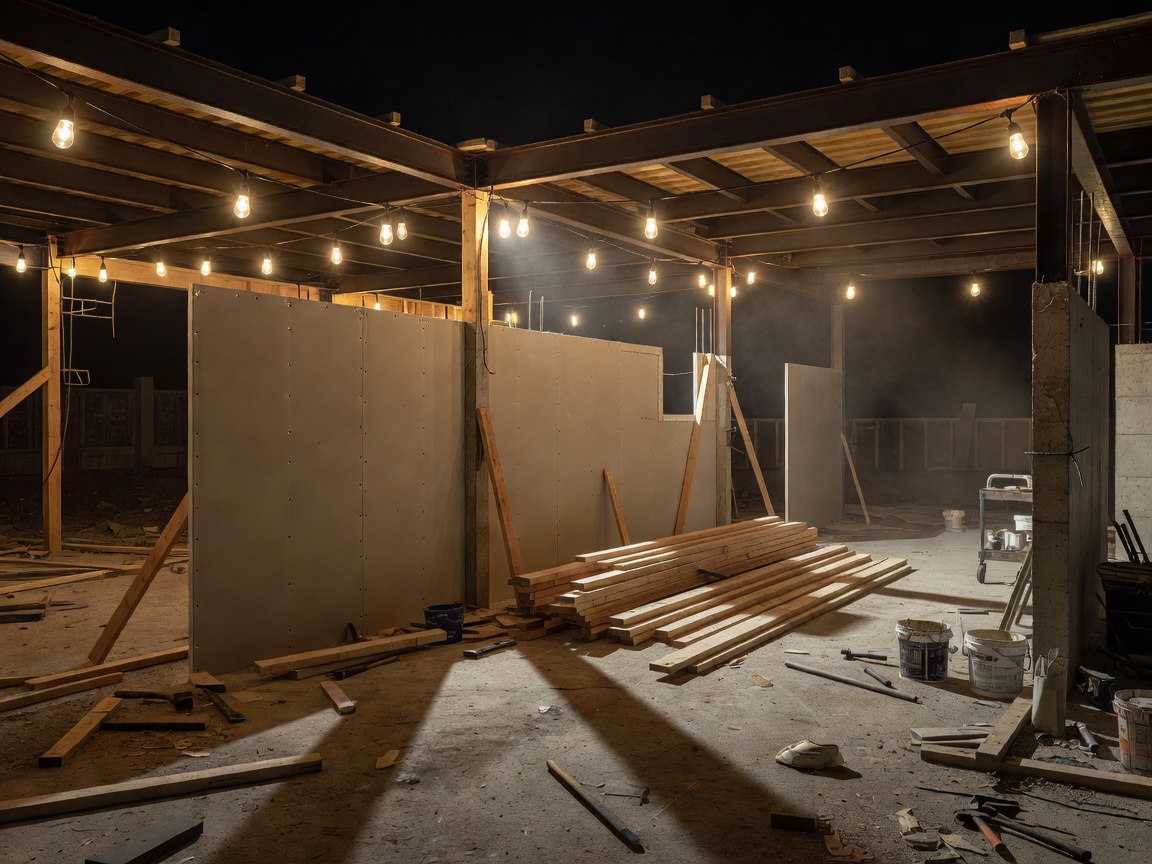
Look at the whole working environment
General construction-site lighting is rarely just about making one task brighter. People may approach from a compound, cross a route, collect materials and enter a work area with different visual conditions at each point. Review the connection between work fronts, access points, stairs, storage, welfare areas and vehicle circulation. The arrangement should make sense as a route, not only as a collection of individual lights.
Portable arrangements can suit short tasks or areas that move frequently. More fixed temporary arrangements may make sense where a route or work zone remains in place for longer. The choice depends on project duration, equipment, mounting conditions, weather exposure, available power arrangements and the people responsible for review. It should be made by appropriately competent professionals rather than from a generic diagram.
Placement and glare
Light position affects shadows and glare as much as output. Consider the view from approaching vehicles, nearby properties, adjacent work areas and pedestrian routes. A bright source in the wrong line of sight can make a route less comfortable to use, while a poorly connected arrangement can leave steps, corners or changing surfaces visually uncertain. Hoarding, scaffolding, plant and stored materials can alter the result after installation.
Weather and dirt also matter. Rain, dust, mud and temporary coverings can change visibility and equipment condition. Regular observation is useful, but electrical inspection or repair should be left to qualified people following the relevant project controls.
Selection checklist
- Describe the work zones and routes that need review.
- Consider portable and longer-duration arrangements separately.
- Review glare, shadows, weather and changing obstructions.
- Record who checks the arrangement and when it is revisited.
- Allow for repositioning as work fronts and access points move.
| Arrangement | Often suits | Planning question |
|---|---|---|
| Portable | Short tasks or moving work fronts | How will coverage be reviewed after relocation? |
| Longer-duration temporary | Established routes and repeated phases | How will weather, damage and layout changes be recorded? |
Good for / What to know
Builders, principal contractors, site managers and facilities teams coordinating low-light work.
Lighting choices must reflect the equipment, site and local requirements. This guide does not replace project-specific safety advice.