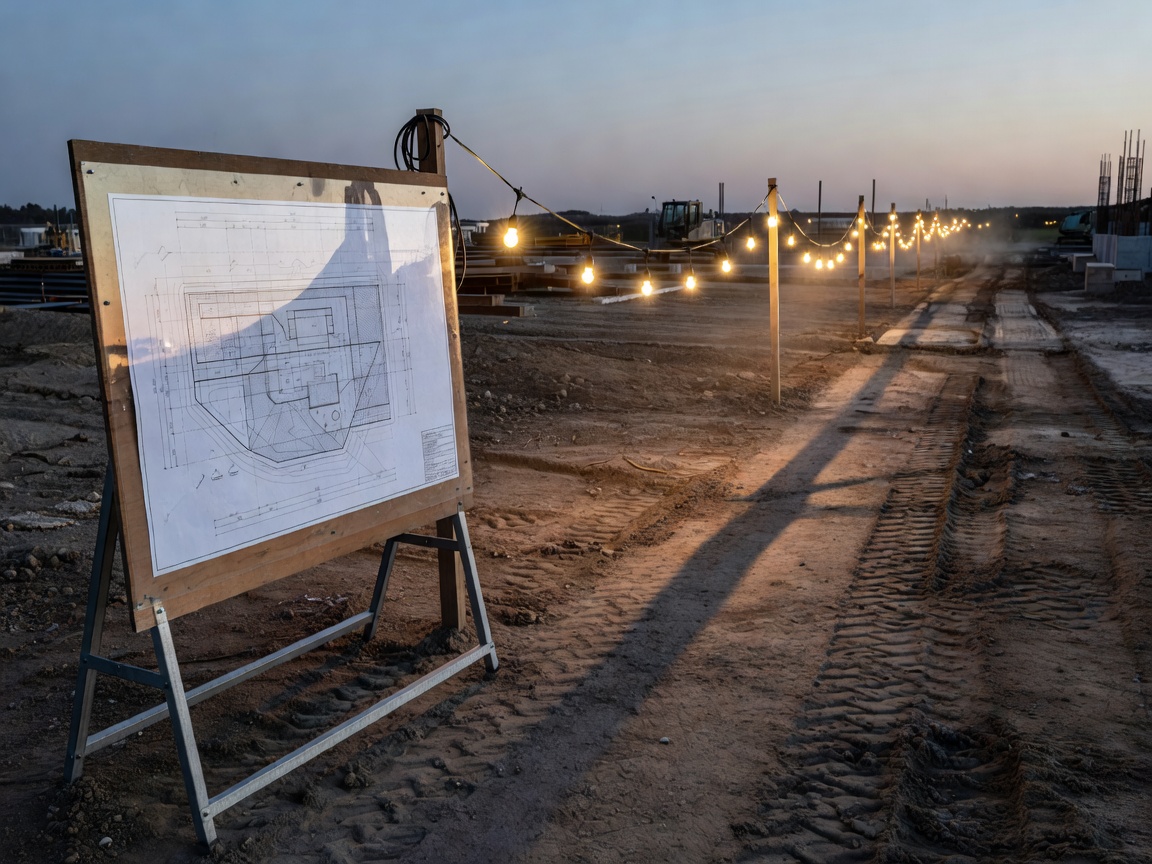
Lighting guide
Site Lighting Planning
Build lighting into the wider site plan instead of treating it as an afterthought.
Explore planning →Temporary lighting / construction sites / industrial projects
Temporary lighting helps construction and industrial environments stay usable when daylight changes, layouts move and teams still need clear access. We help you think through the lighting as part of the wider site plan.
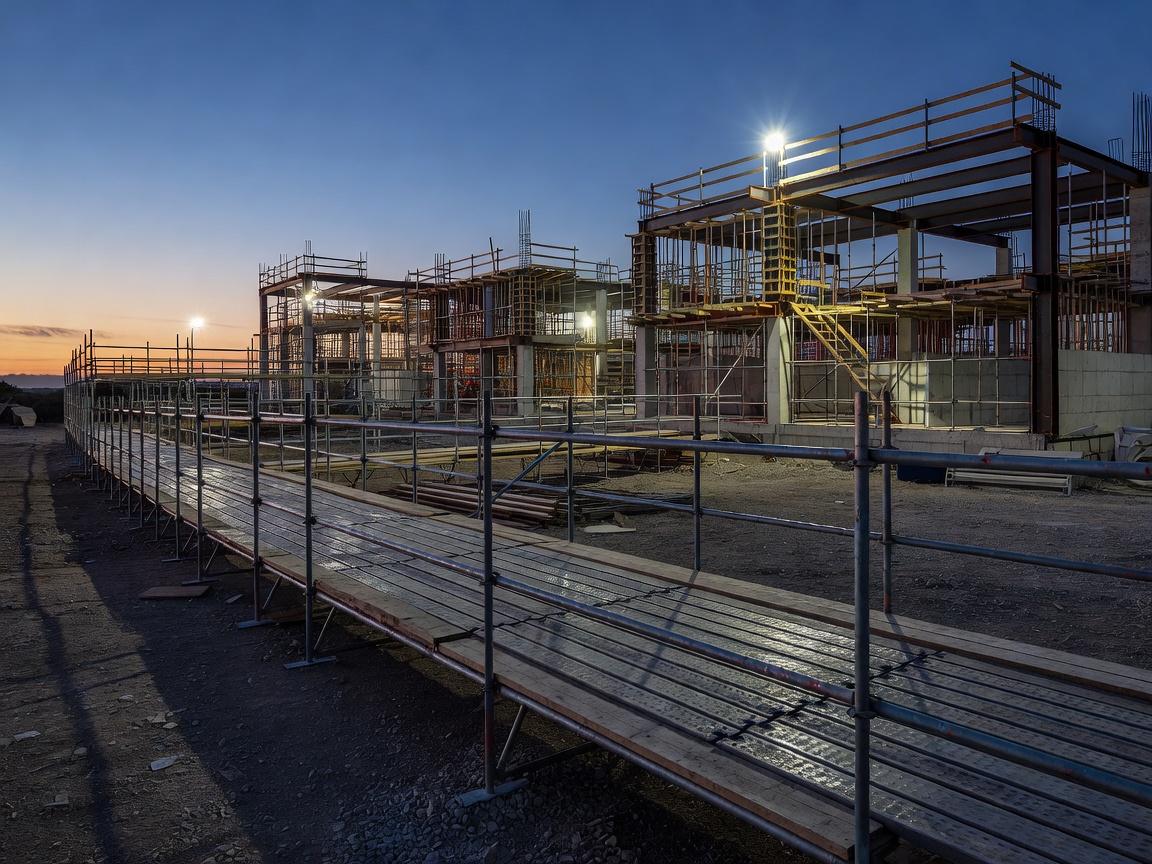
The temporary lighting grid
A good arrangement follows access routes, work areas, storage zones, entrances and changing phases. It also leaves room for weather, deliveries, pedestrian movement and the practical reality that a temporary site rarely stays still for long.
Lighting guide
Build lighting into the wider site plan instead of treating it as an afterthought.
Explore planning →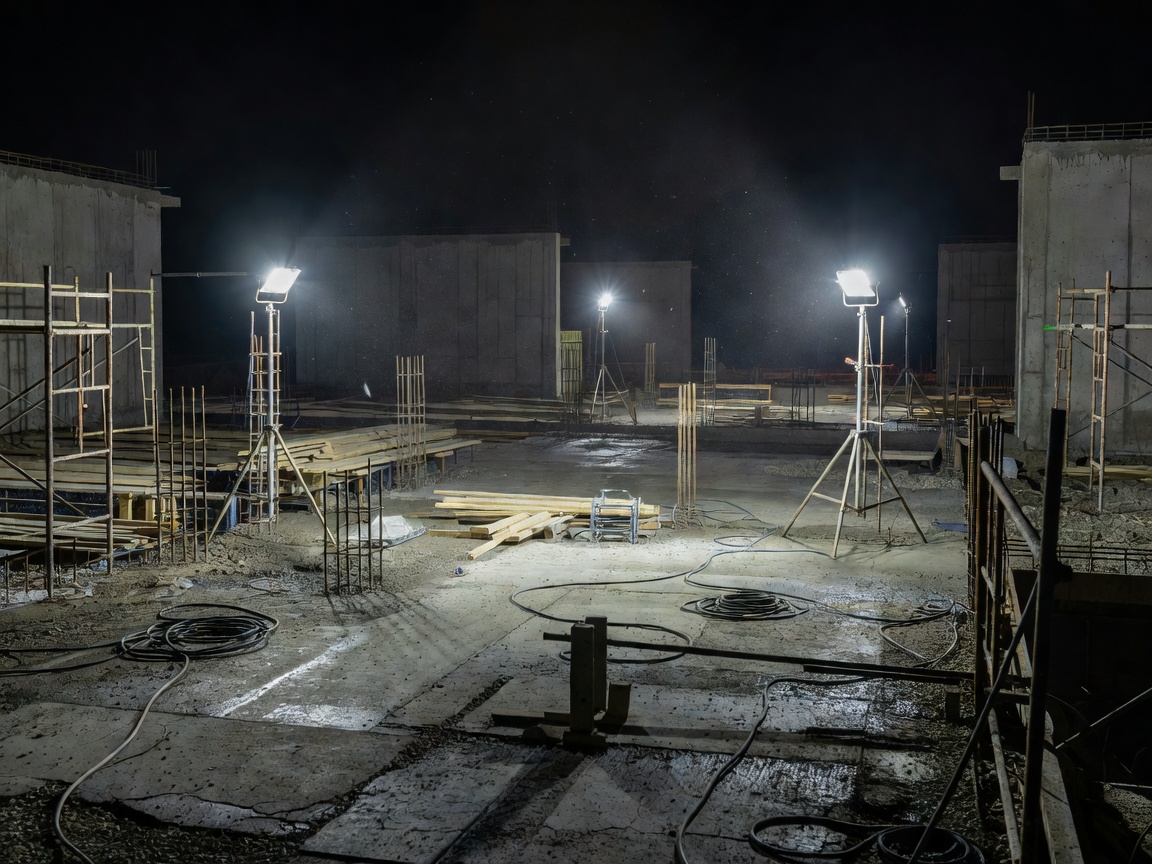
Project environments
Practical considerations for changing work zones, access points and temporary arrangements.
Explore construction →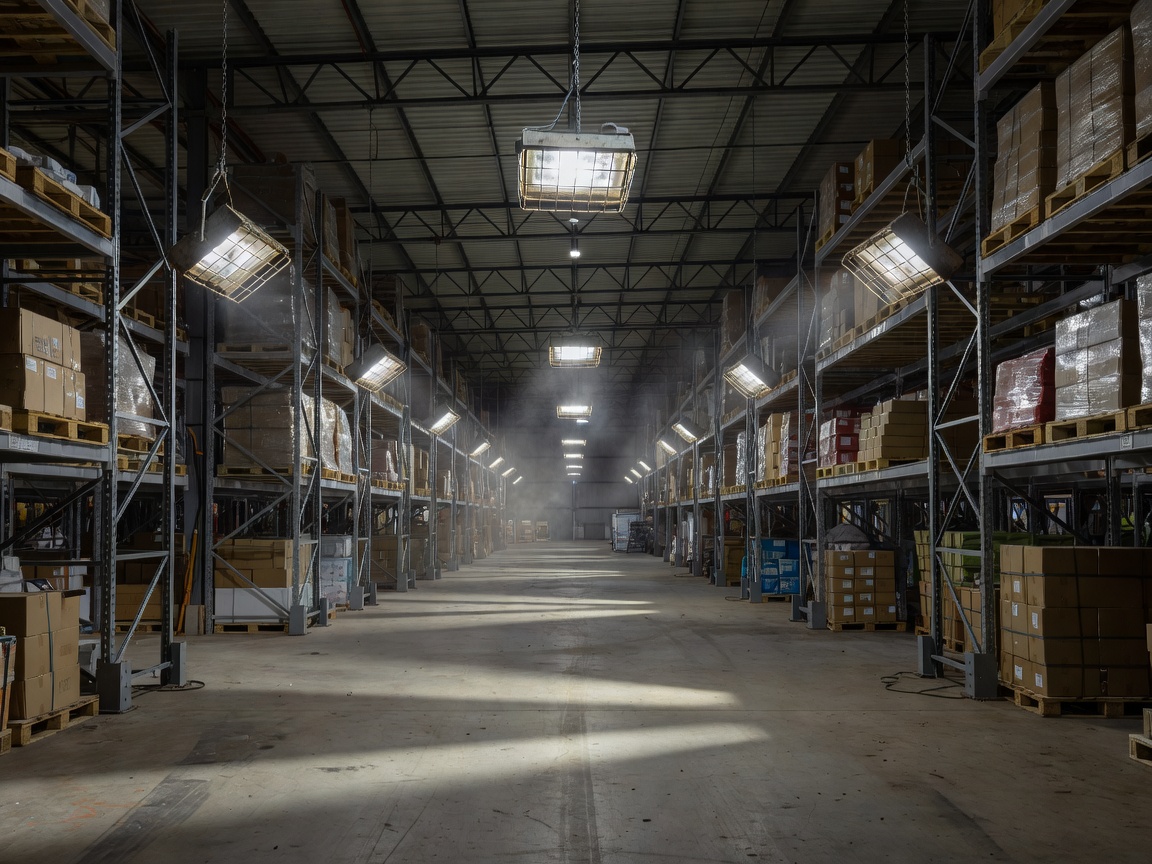
Industrial spaces
Keep active facilities and refurbishment areas workable while layouts and operations change.
Explore industrial →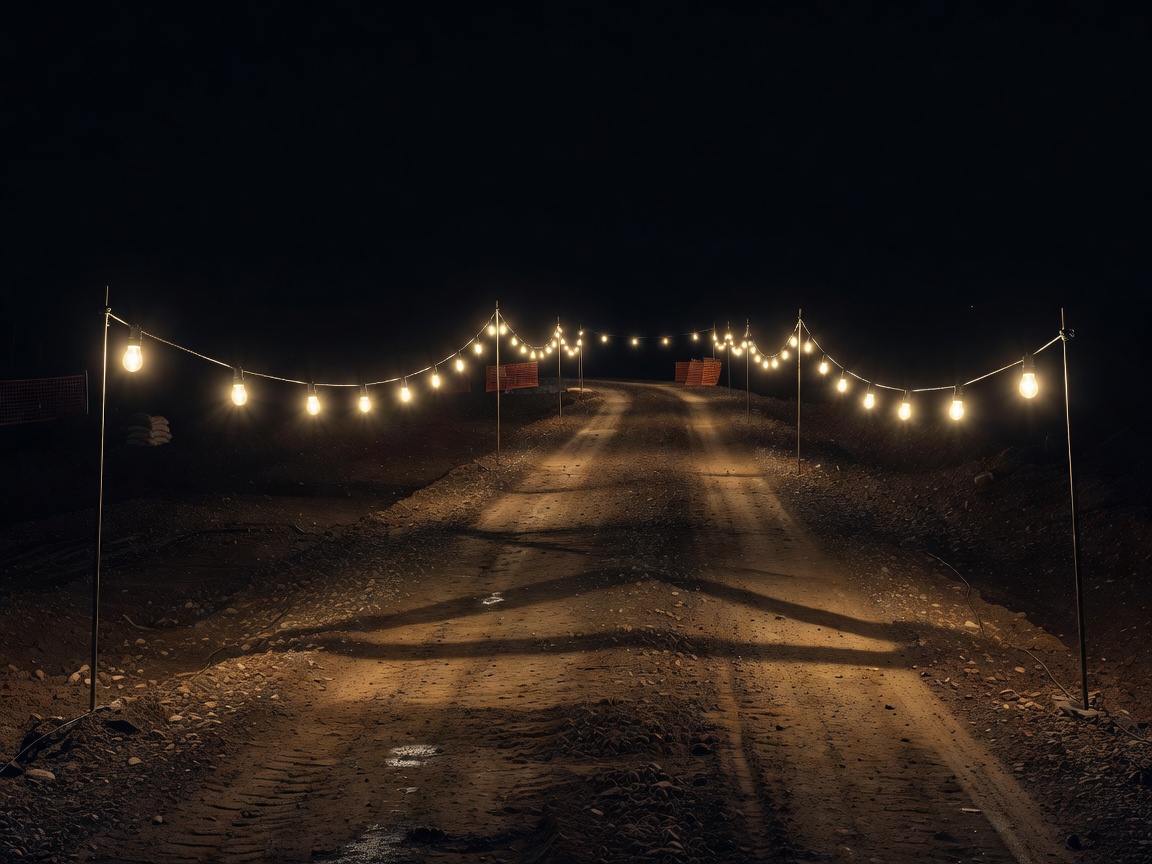
Routes and movement
Consider vehicle routes, pedestrian access, entrances, weather and changing work zones.
Explore routes →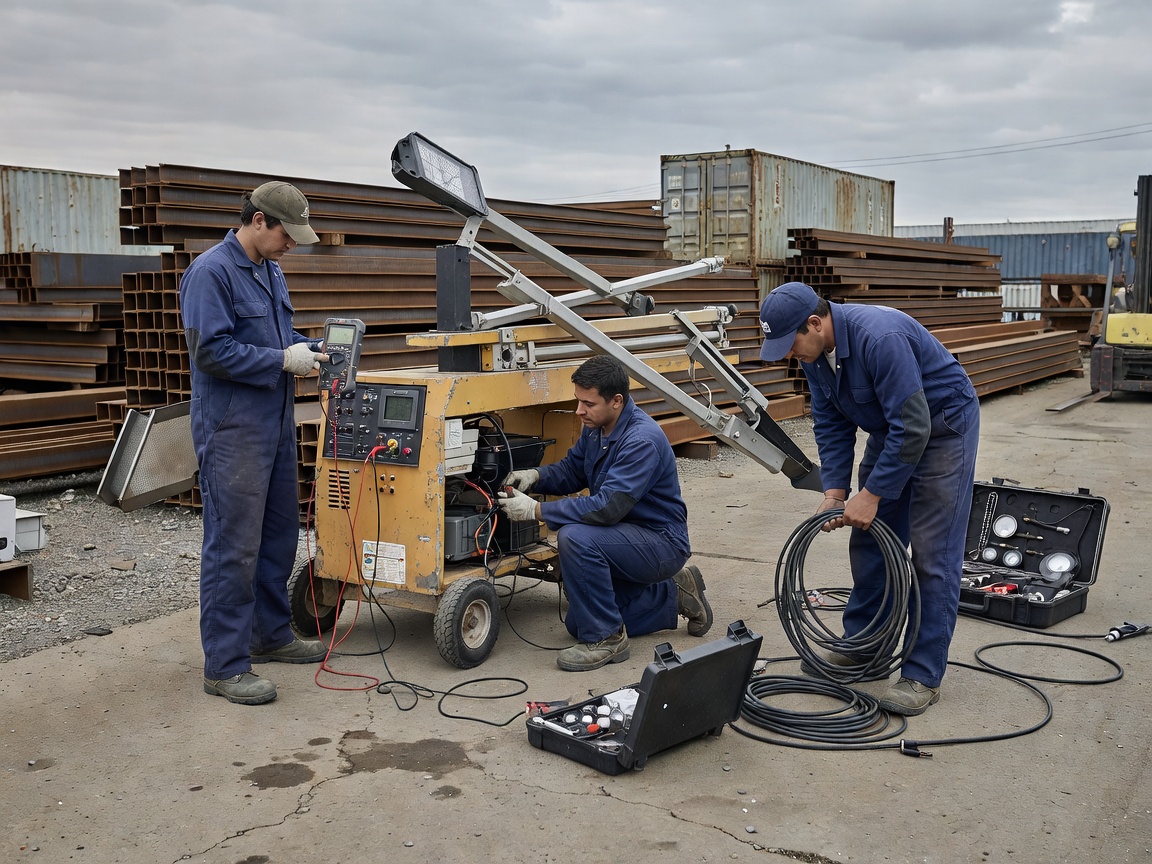
Ongoing care
Keep an eye on coverage, condition, dirt, weather exposure and phase changes.
Explore maintenance →A practical sequence
Temporary lighting interacts with access routes, work areas, storage, entrances and movement. The right arrangement depends on the layout, duration, equipment and local requirements, so it should be reviewed as the project develops rather than copied from one site to another.
Understand the layout, low-light areas, routes and changing phases.
Coordinate coverage with access, storage, work fronts and other site systems.
Use competent personnel and arrangements suited to the equipment and environment.
Revisit coverage when the site, weather, work or routes change.