Think in routes and viewpoints
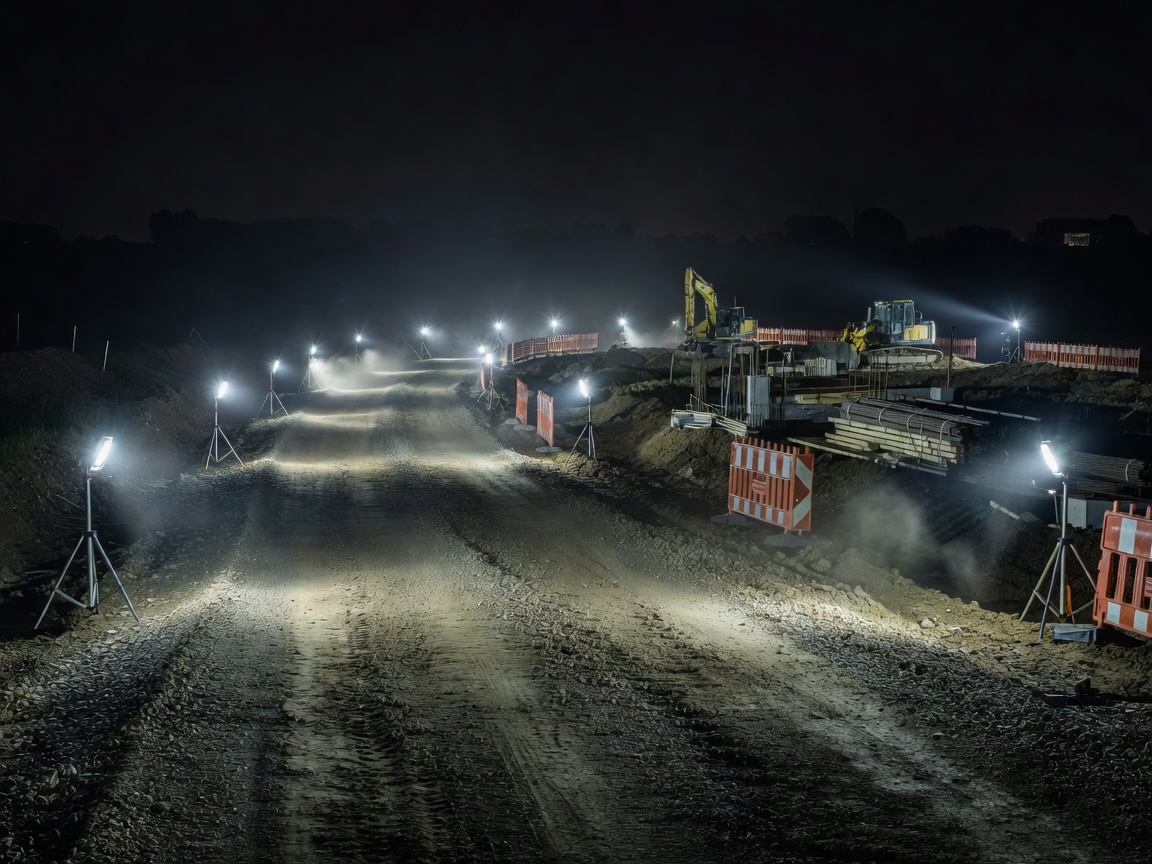
Road and access lighting should be considered from the viewpoints of people arriving, leaving, walking, driving and loading. Look at the route from its approach through the entrance and into the site. Changes in surface, direction, width, barriers or activity should be visible within the wider context of the route.
Temporary route changes can make a familiar entrance feel unfamiliar. Hoarding, plant, stored materials and altered pedestrian paths may create new shadows or reflections. Loading areas need particular attention because vehicle movement, reversing activity and pedestrian access can overlap. The responsible project team should coordinate lighting with its wider traffic and access arrangements.
Glare, weather and signs
Glare can affect drivers, pedestrians, nearby properties and people working beside the route. Consider the position and direction of sources, reflective surfaces, wet weather and the visibility of signs or route markers. Rain, fog, dust and mud may change conditions from one shift to the next. Do not assume that a bright source automatically makes a route clearer.
Local requirements vary by project, road type and jurisdiction. This guide does not provide traffic-control instructions or claim regulatory compliance. The project’s responsible professionals should confirm the applicable requirements, equipment suitability and inspection arrangements.
Planning checklist
- Map entrances, access roads, pedestrian routes and loading areas.
- Record temporary route changes and likely phase changes.
- Review glare from driver, pedestrian and neighbouring viewpoints.
- Consider rain, fog, dust, reflections and sign visibility.
- Agree how coverage and route changes will be reviewed.
| Area | Look for | Review when |
|---|---|---|
| Site entrance | Approach, signs, barriers and turning movement | Access or security arrangements change |
| Pedestrian route | Continuity, transitions and nearby vehicle movement | Walkways or work zones move |
| Loading area | Glare, shadows and overlapping movements | Delivery patterns change |
Good for / What to know
Road work planners, site managers, logistics teams and industrial facilities with changing access.
Requirements depend on local rules, project layout, weather and the people using the route.